
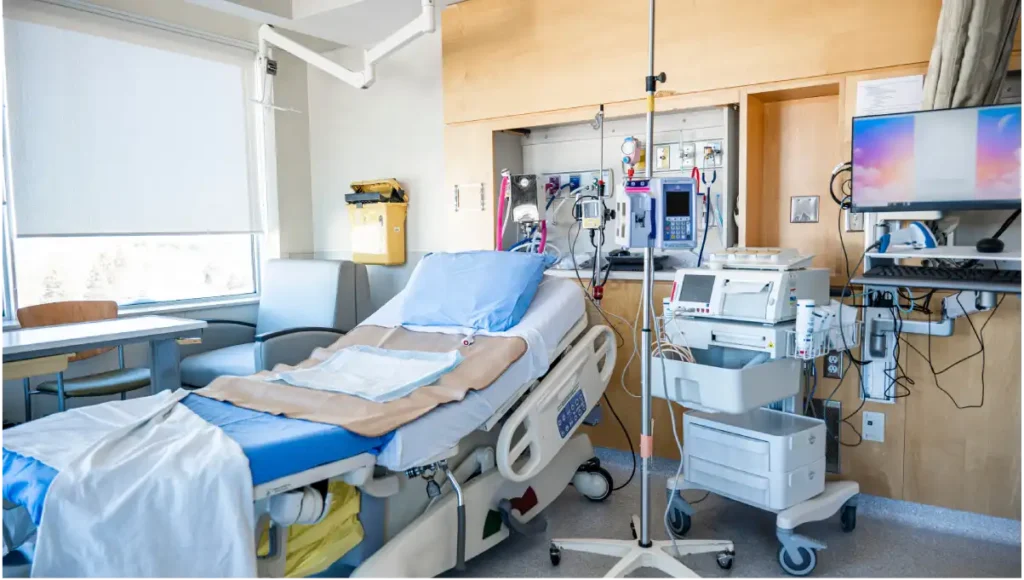
It is 2:30 on a Friday afternoon. An admissions coordinator gets a referral call from a hospital discharge planner. Medicare Part A patient, good clinical fit, ready to transfer today. She checks the whiteboard. Floor 3 has a single room open. She calls the family back, confirms the bed, and starts the paperwork.
An hour later, the DON walks in to say that room was assigned this morning when the overnight discharge was processed. The board just had not been updated.
Now the coordinator has to call the family back. The discharge planner moves to the next facility on her list. The admission is gone, and so is the revenue attached to it.
This is not a communication failure. It is a system failure. And it plays out, in some variation, at nearly every skilled nursing facility still tracking live bed availability on a whiteboard, a shared spreadsheet, or a laminated room chart posted outside the nursing station.
What Bed Management Actually Means in a Skilled Nursing Facility
The phrase bed management means something different in a skilled nursing facility than it does in a hospital. In an acute care setting, bed management is a throughput problem. How fast can a bed turn over after discharge so the next surgical case moves through the unit? The software built for hospitals tracks unit transfers, housekeeping queues, and discharge timing. It measures speed.
That is not an SNF problem. SNF residents stay for weeks or months. The question is not how fast can we turn this bed. It is which room is available right now, on which floor, in which room type, and is it the right fit for this incoming resident. That is a census and compatibility question. Hospital bed management software does not answer it, and searching for bed management software will surface pages of hospital tools that have no relevance to how a skilled nursing facility actually operates.
What an SNF admissions coordinator needs to answer, instantly, during a live referral call, is straightforward: Is there an open bed? Which one? Where? Single or double? These questions need a real-time answer. A whiteboard does not provide one. See how the admissions workflow connects every step from referral through room assignment.
Why Manual Bed Tracking Breaks at the Worst Possible Moment
The Whiteboard Is Always Behind
Whiteboards and paper room charts record what happened. They do not show what is happening. That gap, between the last update and the current moment, is where nearly every manual bed tracking failure originates.
A discharge gets processed at 8:00 AM. The charge nurse updates the board at 10:30 when rounds finish. A referral call comes in at 9:45. The room looks open. It is not. The admissions coordinator confirms a bed that was assigned two hours ago, and no one in the building knew in time to stop her.
Manual systems fail hardest on the days when admissions activity is heaviest. That is not a coincidence. It is the nature of the problem. The busier the day, the wider the gap between reality and the record.
The Double Assignment
A double assignment is the most visible failure, and the one with consequences that extend furthest. Two families have been called for the same room. One arrives to find it occupied. The scramble to relocate, often on a weekend, often with a resident arriving via medical transport, creates clinical risk, staff stress, and a trust event that the referring hospital discharge planner will hear about.
Here is what most facilities get wrong when they review a double assignment afterward: the error was not made by the coordinator who confirmed the room. The error was built into the system she was using. A whiteboard that lags real-time admissions activity by two to four hours will produce a double assignment. The only variable is when.
The Revenue That Does Not Come Back
Every unoccupied Medicare-eligible bed has a daily per diem value under PDPM. CMS updated FY 2026 SNF PPS rates by 3.2 percent, adding an estimated $1.16 billion in aggregate payments to SNFs nationally. (Source: CMS FY 2026 SNF PPS Final Rule, July 31, 2025) MedPAC reported the aggregate FFS Medicare margin for freestanding SNFs was 21.9 percent in 2023, the highest-margin payer these facilities serve. (Source: MedPAC Data Book, July 2025)
Every day a Medicare-eligible bed stays empty because a referral was lost to a slow response or a confirmation error is a day of that margin that cannot be recovered. Admission delays caused by bed assignment uncertainty, not clinical complexity or payer issues, are among the most preventable revenue losses in skilled nursing. For the full picture of how bed assignment fits into the SNF admissions process, see the step-by-step admissions checklist.
What a Live Bed Grid Looks Like and How SNF Staff Actually Use It
The difference between a whiteboard and a software-based bed grid is not digital versus paper. The real difference is whether the information is static or live, and whether it is visible to one person at one location or to everyone with access at the same moment.
The Visual Room Grid
A live bed grid displays every room in the facility as a visual card. Each card shows the room number, the floor, whether the room is single or double occupancy, and current status. Available rooms are visually distinct from occupied rooms. No interpretation. No calling the floor to verify. No hoping the board is current.
In LTC Apps, the visual room assignment grid covers 130 rooms across Floors 2 through 5, with every room represented as a card reflecting its floor, room type, and live occupancy status. The admissions coordinator opens the grid, sees what is actually available at that moment, selects the right room, and confirms the assignment, all without leaving the admissions platform.
Floor-Level and Room-Type Filtering
A 100-bed facility is not navigable in a single unfiltered view when a referral is on the line. When an incoming resident requires a private room on a specific floor due to an isolation protocol, the coordinator cannot afford to scan manually. Filtering by floor surfaces available options in seconds. Filtering by room type, single or double occupancy, narrows it further.
This matters more than it sounds. An incoming resident on airborne precautions cannot go into a double room. A resident with specific behavioral history may need placement away from a particular unit. These decisions happen fast, under referral-clock pressure. A filtered grid makes them possible. A whiteboard does not.
From Availability to Assignment Without Switching Tools
When the right room is identified, the assignment is confirmed in one step. The room status updates instantly across the platform, visible to the DON, the charge nurse, and the business office at the same moment. The DON checking the grid ten minutes later sees exactly what the admissions coordinator just confirmed. There is no lag, no version of the facility that is two hours out of date. Explore room and bed assignment inside the LTC Apps Admissions module.
What Most Bed Management Software Gets Wrong for SNFs
Search for nursing home bed management software and every result is a hospital product. Advanced Data Systems BedManager. The Access Group. Doctors App and Hospitex, both built for Indian nursing homes with no US regulatory context. Every product on the first page was designed for acute-care patient flow: how fast a bed turns after discharge, how housekeeping queues are triggered, how a unit transfer is logged.
That is not an SNF problem. But the deeper issue is this: even a bed tracker built specifically for skilled nursing only solves part of the problem.
A standalone bed tracker tells you a room is available. It does not tell you whether the incoming resident’s payer has been verified, whether the referral has been accepted clinically and financially, or whether the admissions documentation is complete enough for billing to start the moment the resident arrives. It adds structure to one transaction while leaving the handoffs between all the others exactly as fragmented as they were before.
In a manual workflow, bed assignment is a separate event from the admissions record, confirmed by one person in one place while the referral log, the insurance check, and the intake documents live somewhere else. A standalone bed tracker preserves that fragmentation. It just makes the bed-tracking piece look cleaner.
The right fit for a skilled nursing facility is not a bed management tool bolted onto a broken admissions process. It is bed assignment built inside the admissions workflow, so that confirming a room completes a record that already contains the referral, the payer verification, and the clinical acceptance. One step, one record, visible to everyone who needs it.
How Bed Management Connects to the Broader Admissions Workflow
Room assignment is not the first step in an SNF admission. It is closer to the last. Before a bed is confirmed, a referral has been received, clinical acceptance has been evaluated, insurance has been verified, and the admission decision has been made. By the time the admissions coordinator pulls up the room grid, multiple people have already touched the incoming resident’s record.
In a fragmented workflow, each of those touchpoints lives somewhere different. The referral is on the fax pile. The insurance check is in the billing queue. The clinical notes are with the DON. When something goes wrong, a coverage gap surfaces, a clinical concern appears, a room conflict occurs, someone has to reconstruct the full picture by collecting pieces from every location they live. That reconstruction takes time the admissions team does not have.
In an integrated platform, room assignment is the step that closes a record that is already complete. The coordinator confirms the room, and the resident’s intake form, referral documentation, payer verification status, and room assignment are all in one place, accessible to billing, the DON, and the charge nurse without a phone call or re-entry.
This matters for a reason beyond operational convenience. The Medicare revenue clock starts on the day of admission. The MDS assessment window opens immediately. The ARD decision needs to be made in coordination with clinical documentation that should have arrived at referral. Every day of fragmentation in the admissions record is a day of clinical and billing exposure that downstream corrections cannot fully recover. The six-stage admissions model covers exactly where these handoffs break and how to fix them.
Three Failure Modes and What Each Actually Costs
The double assignment is the most visible failure, but it is not the most expensive one. Manual bed tracking produces three distinct patterns, each with a different cost.
The first is the double assignment. The operational and reputational damage lands immediately. One family’s first experience with your facility is arriving to find their room occupied. The hospital discharge planner who sent that referral files it under do not use again. Referral relationships take months to build and can be ended in a single event.
The second is the lost referral, and this one is nearly invisible. The admissions coordinator cannot confirm a room during the call. She says she will call back. The discharge planner moves to the next facility on her list. The referral is gone before the callback happens, and no log records it. Declined admissions get counted. Admissions lost to slow response do not. Facilities chronically underestimate how often this happens because no manual system captures the referrals that were never formally declined, just never returned to in time. This is exactly why referral response time is the single most controllable variable in SNF admissions market share.
The third is census reporting error. When bed assignments are tracked manually, the count that flows to billing, Medicaid reporting, and PBJ submission reflects what the spreadsheet says, not necessarily what happened on the floor. Discrepancies compound over a billing period and produce reconciliation work that should not exist. In a PBJ submission or a Medicaid audit, the spreadsheet was behind is not a defense.
Who This Is For and Who It Is Not
LTC Apps is the right fit if:
- You operate a skilled nursing facility and track room availability on a whiteboard, paper chart, or shared spreadsheet
- You have had a double assignment or a near-miss and know the manual system is the root cause
- You want bed assignment connected to your admissions record, referral log, and eligibility status in one platform, not managed in a separate step with a separate tool
- You are a single-facility operator or small regional group that needs an operations platform built for SNF workflows, not enterprise implementation complexity
This is not the right fit if:
- You are looking for an acute-care hospital bed management system with unit transfer workflows and surgical scheduling
- You need a standalone occupancy tracker with no connection to admissions, billing, or resident records
What Happens After You Request a Demo
A member of the LTC Apps team reaches out within one business day to schedule a call. The demo runs approximately 30 minutes and focuses on the modules most relevant to your facility, including the visual room assignment grid, the full admissions workflow, and any other operational areas you want to see. After the demo, you receive pricing specific to your facility size and module selection. Most facilities have a clear picture of fit and cost within one week of reaching out.
A few questions that come up before booking:
There is no extended implementation timeline. Most facilities are live on their first module within two to four weeks. There is no minimum facility size. LTC Apps works with single-facility operators and small regional groups equally. If you are mid-contract with another vendor, a parallel evaluation now means you are ready to move at contract end without making that decision under time pressure.
Frequently Asked Questions
In a skilled nursing facility, bed management software gives admissions coordinators a live visual grid of every room in the facility, showing floor, room type, and current availability. When a referral comes in, the coordinator confirms a specific room in real time, during the call, without checking a whiteboard or calling the floor to verify.
Most SNFs track bed availability using a whiteboard, a laminated room chart, or a shared spreadsheet. These tools reflect the last update, not the current moment. That gap causes double assignments and lost referrals on any day when admissions activity is high. A live digital grid updates instantly at the point of assignment and is visible to everyone with access at the same time.
Double assignments happen when a room is confirmed to an incoming resident while the tracking system still shows it as available, because a prior assignment has not been reflected yet. This is a latency problem, not a human error problem. The coordinator who confirms a double assignment from a whiteboard would not make the same mistake in a system where room status updates the moment an assignment is confirmed.
In an integrated platform, room assignment is the final step in a continuous admissions workflow, not a separate event in a separate tool. The coordinator assigns a room to a resident whose intake form, referral record, and payer verification are already in the same system. The assignment closes the record and makes it immediately accessible to billing, the DON, and the clinical team.
Yes, and this is exactly what separates an SNF-specific operations platform from a standalone bed tracker. LTC Apps manages the full admissions workflow: referral intake, clinical and insurance acceptance tracking, document collection, and room assignment, all within the same platform and the same resident record.
Under PDPM, Medicare Part A reimbursement to SNFs is paid as a daily per diem that varies by case mix, location, and payment component. CMS updated FY 2026 SNF PPS rates by 3.2 percent, reflecting $1.16 billion in additional aggregate payments to SNFs nationally. (Source: CMS FY 2026 SNF PPS Final Rule) MedPAC reported the aggregate FFS Medicare margin for freestanding SNFs was 21.9 percent in 2023, the highest-margin payer these facilities serve. (Source: MedPAC Data Book, July 2025) Every day a Medicare-eligible bed sits empty due to a lost or delayed admission is a day of that margin that cannot be recovered.
Ready to Replace the Whiteboard?
If your admissions team is confirming beds from a board that may or may not reflect what happened this morning, and you have had a double assignment, a lost referral, or a census discrepancy that traced back to manual tracking, LTC Apps was built to close that gap.
The visual room assignment grid gives your admissions coordinator a live view of every room in the facility, filterable by floor and room type, with one-step assignment that updates instantly across the platform. It is one part of a complete SNF admissions workflow: referral management, clinical and insurance acceptance tracking, document completion, and room assignment, all in the same place, in the same record.